The Boat Across Königssee
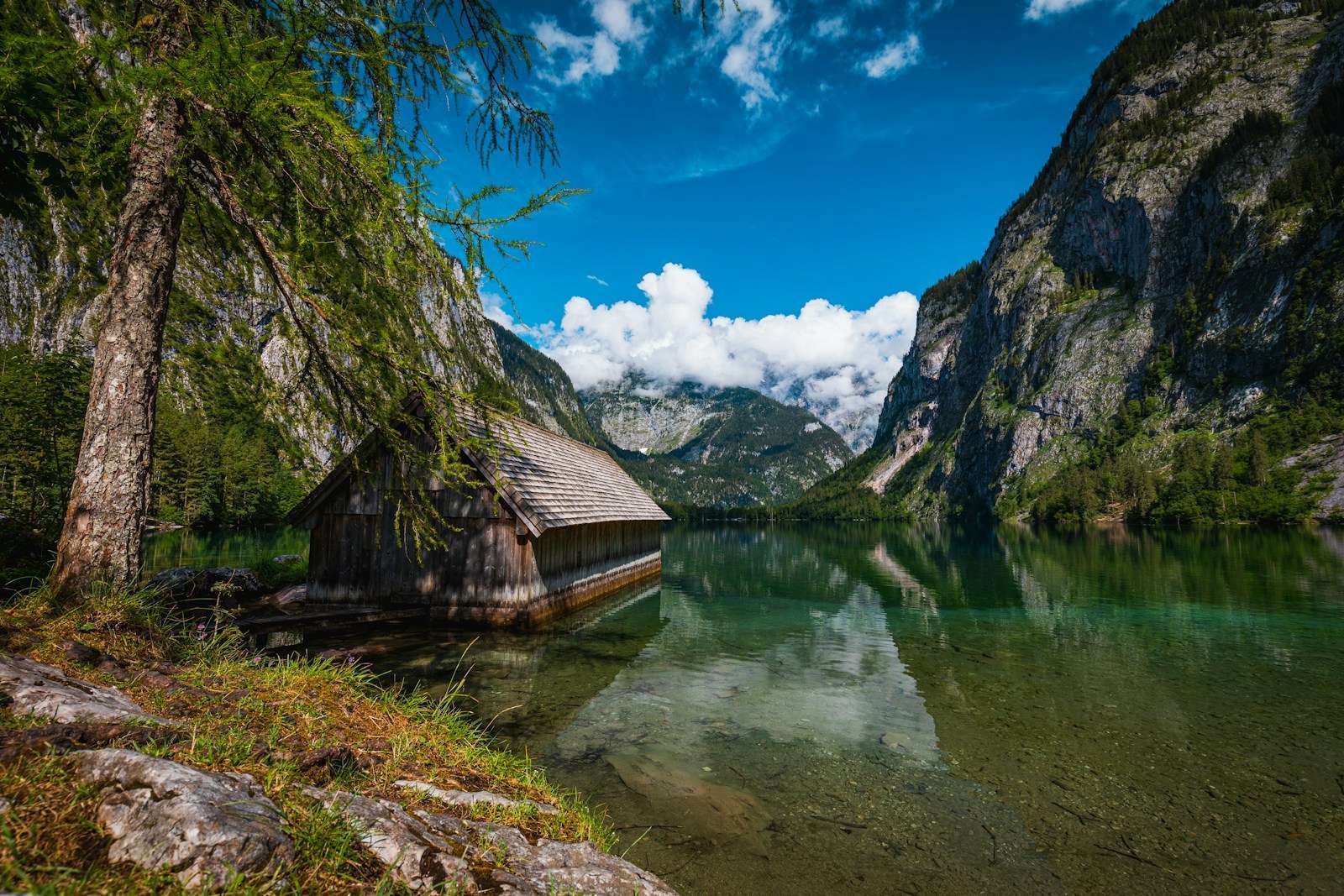
An hour over an open border, Bavaria’s cleanest lake runs silent electric boats between fjord walls — the boatman stops mid-lake to play the Echo Wall, and the red-domed chapel at the far end is reachable by water alone.
The short version
- Bus 840 runs Salzburg Hbf to Berchtesgaden in about 50 minutes across the open German border — no formalities per the alarm — with the 841/842 locals covering the short leg to Königssee’s boat landing.
- The lake’s fleet has been electric since 1909 — combustion engines banned to protect water famously clean enough for the drinking-quality claim locals make with a straight face — and the silence between the fjord walls is the ride’s actual product; sailings and seasonal timetables at seenschifffahrt.de.
- The Echo Wall stop is the tradition the alarm protected: the boat cuts power mid-lake, the boatman plays a flugelhorn at the rock face, and the mountains answer — a small tip in the passed cap is the custom.
- St. Bartholomä’s red onion domes on their green peninsula are the lake’s image and its main landing — pilgrimage church, fisherman’s smokehouse (the smoked char is the correct lunch), and the Watzmann’s east face standing 1,800 meters over it all.
- The Obersee extension runs from the boat’s far terminus at Salet: a half-hour lakeside path to a second, stiller lake with the Röthbach falls — Germany’s highest — threading the back wall; the last-boat arithmetic per the alarm governs it absolutely.
- Berchtesgaden’s darker hilltop history — the Eagle’s Nest and the Dokumentation center’s essential framing — is documented in this network’s Salzburg coverage; the lake day and that visit each want their own register and their own hours.
Getting there
The 840’s border hop is the region’s easiest international commute — passport in the bag as travel practice, nothing checked in practice — and the Berchtesgaden connection to the lake runs at tourist-season frequency. The landing’s ticket hall posts the day’s sailing pattern and, critically, the last returns from Salet and St. Bartholomä: the alarm’s check-on-arrival is the day’s one discipline, because the fleet’s schedule is the only way back. Summer mornings queue for boats by mid-morning — the early Salzburg start rides ahead of it.
The day
Board for St. Bartholomä and let the lake do its work: the walls closing in, the silence the electric fleet preserves, and the Echo Wall stop — power cut, flugelhorn raised, the answer rolling back off the rock, the cap passed with everyone slightly moved and pretending otherwise. St. Bartholomä’s landing gives the chapel, the smokehouse char eaten at a lake table, and the Watzmann east face doing its enormous looming. The committed continue to Salet for the Obersee’s half-hour path — the stiller lake, the mirror shots, the Röthbach thread at the back — with the last-boat math ruling the turnaround. The return sailing runs the walls in reverse light; the Malerwinkel painters’-corner loop above the landing closes the day for those with legs left, and the 841-840 assembly carries you back over the border by early evening.
When to go
May through October is the full-fleet season, with late October’s larch gold the photographer’s slot and midsummer the crowd peak — first boats beat the queues by an hour of calm. Winter trims sailings to the St. Bartholomä core through the snow-walled version, magnificent and cold. Rain flatters the fjord walls with waterfalls and mist; the Echo works in every weather. The alarm’s last-sailing check is the constant across all of it — the lake genuinely keeps its own schedule.
Frequently Asked Questions
Does the trumpet echo really happen on every boat?
On the standard tourist sailings, dependably — it’s a century-old tradition and the boatmen deliver it with professional timing. The tip cap is custom, not obligation. The pause’s silence before the first note is, per the alarm, the actual event.
Is the smoked char worth planning around?
It’s the lake’s signature lunch — char from these waters, smoked at St. Bartholomä’s own house, eaten with bread and horseradish at outdoor tables. Queues form at peak lunch; eating at eleven or two dodges it. Vegetarians get pretzels and the view.
How does the Obersee extension change the day?
It adds the boat’s full length plus 60–90 minutes of walking — and delivers the trip’s stillest water and its classic mirror photograph. The cost is schedule rigidity: miss the last Salet boat and the day fails loudly. The alarm’s arithmetic is not decorative.
Should I combine the lake with the Eagle’s Nest?
This network’s Salzburg coverage documents that site with the Dokumentation-first framing it requires — and the honest answer is no: the lake’s register and that history’s register each deserve a whole day’s attention. Same valley, different visits.
Königssee or Hallstatt from Salzburg?
Hallstatt (documented on this network) for the lakeside village postcard and its crowds; Königssee for the fjord ride, the echo, and walking that starts where the boat stops. Village theater versus lake theater — both an easy hour out, in opposite directions.