Salzburg Day Tours
I’m Serious Day Tour Man AI, your day trip expert. Ask me anything — where to go, how to get there, and what’s actually worth your day.
Salzburg’s day trips stack superlatives inside an hour’s radius: the world’s largest ice cave in a mountain to the south, a lake so protected its boats have run electric since 1909, and the alpine village so photographed it now manages tourists the way other towns manage traffic — the Hallstatt honesty leads below.
One register note upfront: the Berchtesgaden day includes the Obersalzberg’s Nazi-era sites, and the visit gets the sober treatment — documentation first, panorama second. The city section sorts the Sound of Music question, which locals famously answer with a shrug.
Here’s what’s worth a day, with real times and honest trade-offs.

Popular Day Trips

Hallstatt
The lake village on every feed, two and a half hours away

Königssee
Bavaria’s cleanest lake, an hour over an open border
Werfen
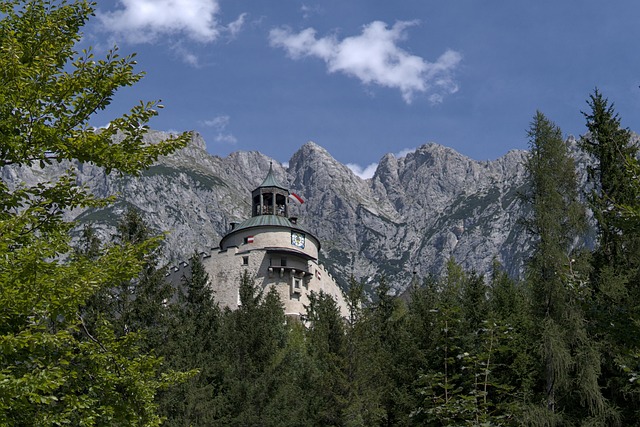
The world’s largest ice cave and a rock fortress, forty minutes south
Hallstatt — The Postcard, Priced Honestly
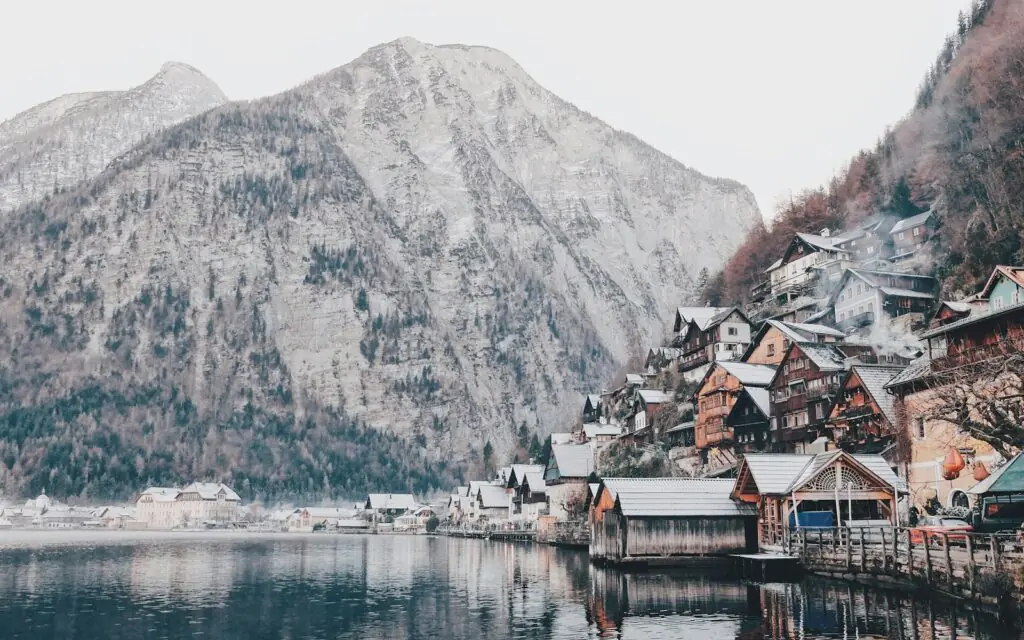
The famous lakeside village sits ninety minutes to two-plus hours away depending on route. The honesty comes first: Hallstatt has roughly 700 residents and receives visitors in the tens of thousands on peak days. The village has responded with bus quotas, viewpoint management, and polite pleas — and the visit works best inside that reality, not against it.
The smart formats: arrive before 9 or after 4, when the coach wave recedes and the town briefly returns to itself — the overnight version, with the lake at dawn, is the transformation. Come by train-plus-ferry: the rail line stops across the lake and the little boat crosses to the village square, which is the best arrival in Austria. Midday in August is the version to avoid.
What justifies it beyond the photo: the Salzwelten salt mine above town — the world’s oldest, with the funicular up, the miners’ slides down, and the Bronze Age “man in the salt” story — plus the Skywalk platform, the bone house’s 600 painted skulls in the chapel ossuary, and the lakefront itself. The rules of respect: this is a living village — drones are banned, private lanes are private, and the famous viewpoint is someone’s neighborhood. Obertraun’s Dachstein caves and Five Fingers platform, across the lake, absorb the crowds’ overflow and are worth it.
Read the full Hallstatt day-trip page.
Berchtesgaden — Königssee & the Eagle’s Nest
Thirty minutes into Germany, the Berchtesgaden day pairs natural beauty with historical weight, and the order matters.
Königssee first: the fjord-like lake where electric boats have run since 1909 to protect the silence — the boatman still stops mid-lake to play a trumpet at the Echo Wall — landing at St. Bartholomä’s red-onion-domed chapel under the Watzmann’s east face. The walk to the ice chapel extends it; the Malerwinkel path serves those staying ashore. Arrive early in summer; the boat queues are real.
The Eagle’s Nest (Kehlsteinhaus), with its mechanics: the mountain road is closed to private traffic, so access runs by the special electric buses from the Obersalzberg documentation center — 6.5 kilometers, five tunnels, about 15 minutes — then the brass-lined lift inside the mountain. It operates roughly early May through October, online tickets beat the limited bus capacity, arrive 30 minutes before your scheduled bus, and plan about two hours up top. The history, stated plainly: built as a Nazi regime showpiece, barely used by Hitler himself, and now a mountain restaurant with a panoramic view — the building trades on a past it must be visited in knowledge of. The Dokumentation Obersalzberg museum at the bus departure point supplies that knowledge; take it first, in the sober register such places require, and pair the day with nothing that trivializes it.
Read the full Königssee day-trip page.
Werfen — The Ice Giants and the Fortress
Forty minutes south, Werfen stacks two verticals. The Eisriesenwelt is the world’s largest ice cave: 42 kilometers of system, with the first kilometer — the ice palaces — open to visitors from May 1 through the start of November. The mechanics are strict and worth respecting: capacity on the cable car and tours is limited, so book timed tickets online; the last tours run mid-afternoon (cash desk closes at 3); and the visit climbs 134 vertical meters inside the cave — the equivalent of a 40-story stair climb — at freezing temperatures year-round. Bring a hat, gloves, and real shoes; the visit is glorious on a hot day and unsuitable for anyone with serious mobility or heart limits. The traditional carbide lamps handed to visitors are half the atmosphere.
Hohenwerfen Fortress, on its crag across the valley, is the second act: the 900-year-old castle whose falconry center flies eagles and vultures off the ramparts in daily shows (seasonal; check times) with the Tennengebirge as backdrop. The pairing makes a full day; the ice cave alone, with its cable car and walk-in, is an honest half-day-plus. In July and August the cave’s parking fills on rainy days — the Werfen shuttle covers it.
Read the full Werfen & the Ice Cave day-trip page.
The Wolfgangsee & the Schafberg — The Gentle Lakes
An hour east, the Salzkammergut’s gentler register: the Wolfgangsee, ringed by St. Gilgen (Mozart’s mother’s birthplace, cable car up the Zwölferhorn), Strobl, and St. Wolfgang — the pilgrimage village whose church holds Michael Pacher’s gothic altarpiece, a genuine masterpiece hiding in a lake town.
The headline is the Schafberg: Austria’s steepest cog railway, running since 1893, hauling vintage carriages up to a summit whose view — a dozen lakes scattered below the Dachstein — has been the region’s postcard since the railway was new. The mechanics: it runs roughly May through October, the trains sell out on fine summer days (book the ascent time online; descent flexibility varies), and the summit hotel’s terrace coffee is the ritual. The lake boats connect the villages as a leisurely circuit and pair naturally with the railway.
The stack: swim from the lidos in summer (the lake runs warmer than its alpine looks), the Zwölferhorn’s cable-car-and-hike version for the quieter summit, and Bad Ischl twenty minutes on — the imperial spa town where Franz Joseph summered for eighty years and got engaged to Sisi, with the Kaiservilla and the Zauner pastry institution as the add-ons. This is the low-logistics, high-charm day, and the right one for mixed-energy groups.
The Grossglockner Road — The High Alpine Day
Two hours southwest begins Austria’s greatest drive: the Grossglockner High Alpine Road, 48 kilometers of engineered switchbacks — 36 hairpins — climbing to 2,504 meters at the Edelweissspitze and running to the Kaiser-Franz-Josefs-Höhe, the terrace facing the Grossglockner itself (Austria’s highest peak) above the shrinking Pasterze glacier.
The mechanics: it’s a toll road (per-car pricing, tickets online or at the gates), open roughly May through early November depending on snow, with closing hours overnight even in season. Weather decides everything — the road in cloud is hairpins without the payoff, so check the webcams the morning of and hold the day flexible. Marmots at the Franz-Josefs-Höhe are effectively guaranteed; ibex take luck.
The math: from Salzburg it is a long day — four-plus hours of driving before the mountain road itself — best done as a loop with stops (Zell am See’s lake for the return swim, Krimml Waterfalls — Austria’s highest — for the leg-stretcher on the western routing). Motion-sensitive passengers should medicate; drivers should love driving. It rewards exactly the traveler it sounds like it rewards, and the Werfen or Wolfgangsee days serve everyone else better.
The Fortress, the Sound of Music & Salzburg Itself
The city first: Hohensalzburg Fortress — central Europe’s largest intact castle — rides its funicular from the old town, and the honest version is grounds-and-view at golden hour, with the Prince’s Chambers for the committed. Below it, the Getreidegasse’s wrought-iron guild signs, Mozart’s birthplace (the yellow house, taken as pilgrimage or facade photo by taste), the Residenz and cathedral quarter, and the Mirabell Gardens composing the fortress view every camera wants.
The Sound of Music, calibrated: the film is a visitor phenomenon locals famously never saw — the tours are cheerful, well-run coach theater visiting Leopoldskron’s lake, the Hellbrunn gazebo, Mondsee’s wedding basilica, and the Mirabell steps, and they deliver exactly what fans want. Book one as a fan or skip it entirely; there is no middle setting. Hellbrunn Palace on its own merits — the archbishop’s trick fountains that soak guests exactly as they did in 1615 — is the underrated family half day.
The rest: the Augustiner Bräu in Mulln, Austria’s largest beer hall, with its rules (rinse your stone mug at the fountain, present it at the barrel, pay by the Maß, bring food in or buy from the stalls); the DomQuartier’s connected state-rooms circuit for the rainy day; and the Salzach’s riverside paths. Season math: the Festival (late July–August) is the world’s great classical event and reprices the city accordingly — book months ahead or schedule around it; December’s Advent markets and the Silent Night chapel at Oberndorf own the winter; and the föhn wind gives the region its impossibly clear postcard days, mostly in fall.
Frequently Asked Questions
Is Hallstatt worth it despite the crowds?
Yes — before 9, after 4, or overnight. Arrive by train-and-ferry for the best entrance in Austria, add the salt mine and bone house, and treat the village as the home it is: no drones, private lanes respected.
How do you visit the Eagle’s Nest?
By the special electric buses from Obersalzberg — the road is closed to private cars — roughly May through October, with online tickets beating limited capacity. Visit the Dokumentation Obersalzberg first; the site’s history requires the sober version.
What should you know before the Eisriesenwelt ice cave?
Book timed tickets online (capacity is capped), dress for freezing temperatures in July, and respect the climb: 134 vertical meters inside, a 40-story stair equivalent. Open May 1 to the start of November; last tours mid-afternoon.
Is the Grossglockner Road doable from Salzburg?
As a long, weather-dependent driving day, yes — toll road, 36 hairpins, open roughly May to early November. Check the webcams that morning; the road in cloud is effort without payoff. Zell am See makes the return stop.
Should you take a Sound of Music tour?
If you love the film, yes — it’s well-run coach theater hitting Leopoldskron, the gazebo, and Mondsee, and fans leave delighted. If you don’t, skip it entirely; Hellbrunn’s trick fountains are the better use of the half day.